

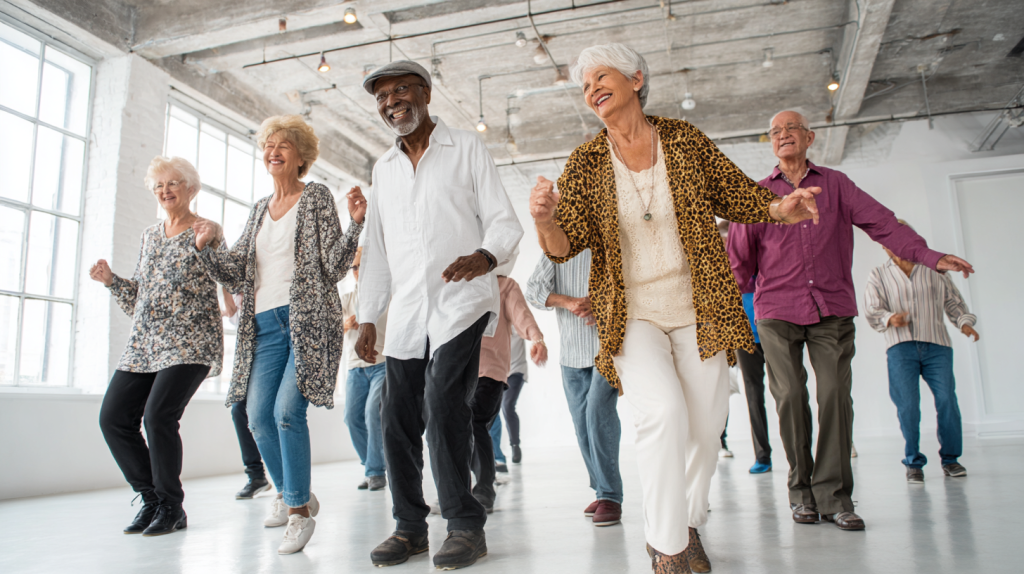
As we age, coordination and balance naturally decline—but that doesn’t mean we have to accept stiffness or clumsiness as part of getting older. In fact, one of the best ways to stay sharp, stable, and confident after 40 is through dance.
Dancing strengthens both the body and brain, improving coordination, memory, and balance through rhythmic movement. It’s fun, low-impact, and incredibly effective for keeping adults active and alert.
Here’s how dance helps you stay agile, coordinated, and confident at every stage of life.
1. Dancing Trains the Brain and Body Together
Coordination relies on your brain and muscles working in sync. Dancing strengthens that connection through rhythm, timing, and repetition.
Each step challenges your memory and focus while keeping your body active—a combination proven to support long-term brain health.
2. It Builds Balance and Stability
Dance routines involve shifting weight, turning, and moving in different directions. These controlled movements strengthen stabiliser muscles and improve balance.
Better balance means fewer falls and more confidence in everyday movement.
3. It Improves Reaction Time
As you age, reflexes naturally slow down. Dancing reverses that by training quick reactions to rhythm and partner cues.
Over time, you’ll notice faster coordination and sharper movement responses in daily life.
4. It Strengthens Core and Lower Body Muscles
Strong legs and core are key for coordination. Dancing engages these muscles constantly to support balance and posture.
That strength not only helps you move gracefully but also protects your joints and back from strain.
5. It Boosts Flexibility and Mobility
Each dance move involves stretching and rotating joints, keeping them flexible.
This improved range of motion makes coordination easier, reduces stiffness, and keeps you moving freely as you age.
6. It Keeps the Mind Active and Engaged
Learning new patterns and rhythms challenges memory, focus, and concentration.
That mental stimulation helps maintain cognitive health and coordination well into later life, making dance a great “brain workout” too.
7. Partner Dancing Enhances Awareness and Timing
Partner dancing builds awareness of your own movement and someone else’s at the same time.
This teaches spatial awareness, balance, and rhythm—key components of coordination at any age.
At Best Beginner Dance Classes Sydney, classes are designed for adults who want to move comfortably and confidently through guided, easy-to-follow lessons.
8. It Helps Correct Posture and Movement Patterns
Dancing naturally aligns the spine and encourages open, upright posture.
That alignment improves balance and prevents compensating movements that can cause instability or stiffness.
9. It Combines Fun with Function
Unlike repetitive balance exercises, dancing is enjoyable. The music, energy, and social connection make coordination training feel effortless.
When you’re having fun, you’re more likely to keep practising—and that’s what delivers results.
10. It Builds Confidence and Independence
Improved coordination helps you move with ease, confidence, and freedom.
Whether it’s walking, travelling, or dancing socially, you’ll feel capable and steady—qualities that keep you independent and self-assured.
How to Improve Coordination After 40 Through Dance
-
Start with beginner classes. Learn basic steps and rhythms at a comfortable pace.
-
Be consistent. One or two classes a week make a big difference.
-
Focus on posture and rhythm. Good form improves results and confidence.
At Best Beginner Dance Classes Sydney, experienced instructors help adults over 40 build coordination safely while keeping classes enjoyable and relaxed.
Conclusion
Coordination is a skill you can keep for life—with the right kind of movement. Dancing keeps your body agile, your mind sharp, and your confidence high.
It’s never too late to start moving better, feeling stronger, and staying in rhythm with your own vitality.
Join Best Beginner Dance Classes Sydney and discover how dance can help you move with balance, grace, and confidence—at any age.
FAQs
Yes. Dancing trains balance, reflexes, and rhythm while keeping the brain and body active—making it one of the best ways to maintain coordination.
Not at all. Many students start dancing in their 40s, 50s, or later. Classes are tailored to beginners and focus on safe, gradual improvement.
Dancing strengthens stabiliser muscles, improves posture, and trains awareness of movement, which together enhance balance and coordination.
Beginner classes are designed for complete newcomers. Instructors break movements into simple steps and build coordination gradually.
Yes. Dancing is low-impact and can be adjusted to suit comfort levels. It helps improve mobility while reducing joint stiffness safely.
One to two classes per week will show noticeable improvements in coordination and balance within the first month.
Absolutely. Learning steps and rhythms strengthens memory, focus, and reaction time, keeping the mind sharp and alert.
Yes. Improved balance, posture, and awareness from dance training significantly reduce the risk of falls and related injuries.
Ballroom, Latin, and Swing styles are ideal. They build coordination through gentle, repetitive movement and music-driven rhythm.
Visit Best Beginner Dance Classes Sydney. Their classes help adults over 40 stay active, coordinated, and confident through movement.